


Many taxpayers assume IRS notices only happen when someone fails to report income or makes a major tax mistake.
In reality, even relatively small clerical or data-entry issues on a tax return can sometimes trigger significant IRS adjustments, notices, delayed refunds, or proposed tax balances.
In today’s environment, many IRS notices are generated automatically by computerized matching systems. When information on the return does not perfectly match IRS records, the system may automatically issue adjustments – even when the taxpayer legally qualifies for the deductions, credits, or filing status claimed.
Here is the case study to help you understand what may happen and why.
A Real World Example Of How A Small Error Triggered An IRS Notice
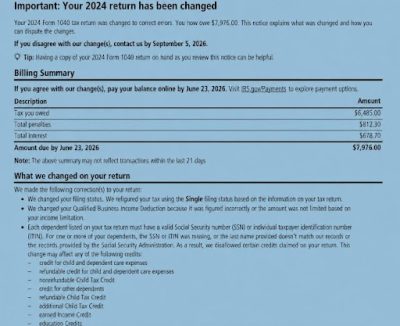
In one recent matter handled by our office, a taxpayer received an IRS notice after the children’s last names were entered incompletely on the originally filed tax return. The IRS matching system treated the issue as a dependency mismatch and automatically disallowed the taxpayer’s dependents and Head of Household filing status changing status to Single at a much higher tax rate
The consequences became far larger than many people would expect from what initially appeared to be a relatively small clerical issue.
Once the IRS changed the filing status and removed the dependents, multiple areas of the return were affected simultaneously, including:
As a result, the taxpayer’s position changed from an expected refund of approximately $6,500 to a proposed balance due of nearly $7,000 – a swing of more than $13,000 caused primarily by a name mismatch issue and the chain reaction of IRS adjustments that followed.
Why These Situations Become Complicated
Many taxpayers believe situations like this can be resolved with a quick phone call.
In reality, correcting IRS adjustments often requires substantial professional review and representation.
In this particular matter, resolving the issue required:
Situations like this often become far more time-consuming than taxpayers initially expect.
Automated IRS Systems Do Not Always Understand Context
IRS matching systems are designed to identify discrepancies automatically. However, automated systems do not always recognize the full context of a taxpayer’s situation.
A relatively small issue such as:
• Name mismatches
• Incorrect Social Security numbers
• Filing status inconsistencies
• Missing schedules
• Incorrect carryovers
• Transposed numbers
• Incomplete reporting
may triggerlarger downstream tax adjustments throughout the return.
In many situations, the IRS system is simply applying automated rules based on incomplete or mismatched data.
Common Problems Triggered by Small Errors In Tax Returns
We frequently provide help with IRS notices involving:
In some cases, the original return itself was substantially correct, but the automated notice process created a much larger proposed balance due.
Do Not Ignore IRS Notices!
Even when an IRS notice appears incorrect, it should not be ignored.
Many notices contain strict response deadlines, and failure to respond may result in the IRS automatically assessing the proposed balance along with additional penalties and interest.
Professional CPA Review Can Be Critical
Tax notices often involve much more than simply “checking a number.”
Proper resolution may require:
• Transcript analysis
• Tax law research
• Recalculation of deductions and credits
• Amended returns
• Supporting documentation
• Written explanations and representation before taxing authorities
Each case is different, and the correct response depends on the underlying facts and documentation.
Need assistance with IRS notices, amended returns, dependency issues, or tax representation matters?
Katerina Donckels CPA assists individuals and businesses throughout California and the United States with IRS notices, amended returns, tax compliance matters, and representation before taxing authorities.
This article is intended for general informational purposes only and should not be considered tax advice. Every taxpayer’s situation is unique and should be reviewed individually.