

One of the most frightening things taxpayers can receive is a notice that the IRS may begin garnishing wages.
Many people assume:“If the IRS starts garnishing wages, there is nothing I can do.”
Fortunately, that is not always true.
In many situations, wage garnishments occur only after:
• multiple notices were sent,
• balances remained unresolved for a long period of time, or
• required tax returns were never filed.
And in many cases, taxpayers waited simply because they felt overwhelmed, scared, or did not know where to begin.
What Is an IRS Wage Garnishment?
An IRS wage garnishment – also called a wage levy – occurs when the IRS requires an employer to send part of a taxpayer’s paycheck directly to the IRS to satisfy unpaid tax debt.
Unlike many private creditors,the IRS has very broad collection authority under federal law.
Once a wage levy is issued:
• employers are generally legally required to comply, and
• part of each paycheck may continue going to the IRS until the issue is resolved.
Many taxpayers are surprised to learn that IRS wage levies are often continuous, meaning they may continue each pay period unless the IRS releases the levy.
The IRS Usually Sends Multiple Notices First
In most situations, wage garnishment does NOT happen immediately.
Typically, the IRS sends a series of notices over time, which may include:
• balance due notices,
• collection notices,
• Final Notice of Intent to Levy, and
• Collection Due Process rights notices.
Unfortunately, many taxpayers:
• move and never receive the notices,
• become overwhelmed and stop opening mail, or
• assume they will “deal with it later.”
By the time wage garnishment begins, the situation has often been unresolved for a significant period of time.
This article is intended for general informational purposes only and should not be considered tax advice. Every taxpayer’s situation is unique and should be reviewed individually.
Unfiled Tax Returns Often Make the Situation Worse
One of the most common situations I see involves taxpayers who stopped filing returns for several years.
In those situations:
• the IRS may file substitute returns,
• balances may grow quickly from penalties and interest, and
• collection activity may eventually escalate.
Sometimes taxpayers assume:
“I cannot afford to pay, so there is no point filing.”
That is usually a mistake.
In many cases, filing the missing returns properly may substantially reduce the balance compared to IRS estimates.
Can IRS Wage Garnishment Be Stopped?
In many situations, yes – but it depends on the facts.
Possible resolution options may include:
• filing missing tax returns,
• installment agreements,
• currently not collectible status (NCS)
• penalty relief requests,
• Offer in Compromise analysis, or
• demonstrating financial hardship.
Every situation is different.
The important thing is that taxpayers generally have FAR more options before ignoring the problem for years.
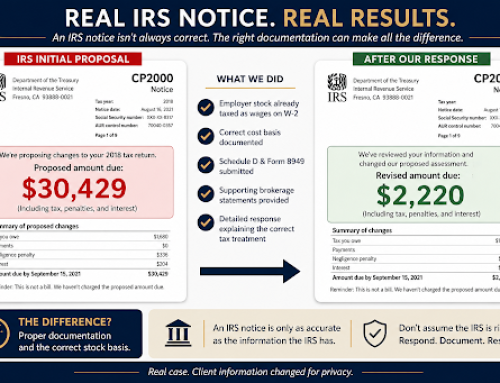
The IRS Balance Is Not Always Correct
Another major misconception is:
“If the IRS says I owe it, the balance must automatically be correct.”
That is not always true.
In many situations:
• income was reported incorrectly,
• estimated payments were not applied properly,
• substitute returns overstated tax,
• deductions were missed, or
• IRS records were incomplete.
This is why transcripts, notices, prior filings, and supporting documentation often need to be reviewed carefully before taxpayers assume the balance is final.
Ignoring the Problem Is The WORST Thing You Can DO
Many taxpayers delay dealing with IRS notices because they are scared.
That reaction is extremely common.
But unfortunately, ignoring IRS notices generally allows:
• penalties,
• interest, and
• collection activity
to continue growing.
The earlier tax issues are addressed, the more resolution options are usually available.
Professional CPA Representation Helps
IRS collection matters frequently involve:
• transcript analysis,
• compliance review,
• preparation of missing returns,
• financial analysis,
• notice response, and
• negotiation with taxing authorities.
Every taxpayer situation is different, and the correct resolution depends on the specific facts.
Katerina Donckels, CPA assists individuals and businesses with IRS notices, wage garnishments, unfiled tax returns, installment agreements, tax compliance matters, and representation before taxing authorities throughout California and the United States.